
How to Find the Best Local Cafés in Any City (Without Relying on Tourist Traps)
There's a particular pleasure in finding a café that feels like it belongs to a city — one where the barista knows the regulars by name, the beans come from a roaster three streets over, and nobody's trying to sell you a seasonal Frappuccino. These places exist in almost every city on earth. The challenge is finding them before you accidentally spend your morning in a chain that could be anywhere.
This guide gives you a practical system for discovering great independent coffee shops whether you're arriving somewhere for the first time or trying to go deeper in a city you already know.
Why Local Cafés Are Worth Seeking Out
Independent coffee shops consistently offer something chain cafés structurally cannot: a genuine connection to the neighborhood they occupy. That's not sentimentality — it's just how incentives work.
A local café owner lives and works in the community. Their reputation depends on the quality of every cup and the warmth of every interaction. A regional or national chain optimizes for consistency across hundreds of locations, which means flattening out anything too distinctive or risky.
Beyond atmosphere, specialty coffee culture — the third-wave movement that treats coffee as a craft ingredient rather than a commodity — is almost entirely driven by independent operators. If you care about single-origin beans, precise extraction, or a pour-over made with actual attention, you're looking for an independent shop.
There's also the practical side: local cafés tend to be cheaper than premium chains, better integrated into residential neighborhoods, and far more likely to have the kind of quiet, unhurried atmosphere that makes a two-hour work session or a slow weekend morning actually enjoyable.
Start Online Before You Arrive
The most efficient way to build a shortlist of independent coffee shops is to spend 20–30 minutes researching before you land. A few targeted searches will surface options that generic travel sites miss entirely.
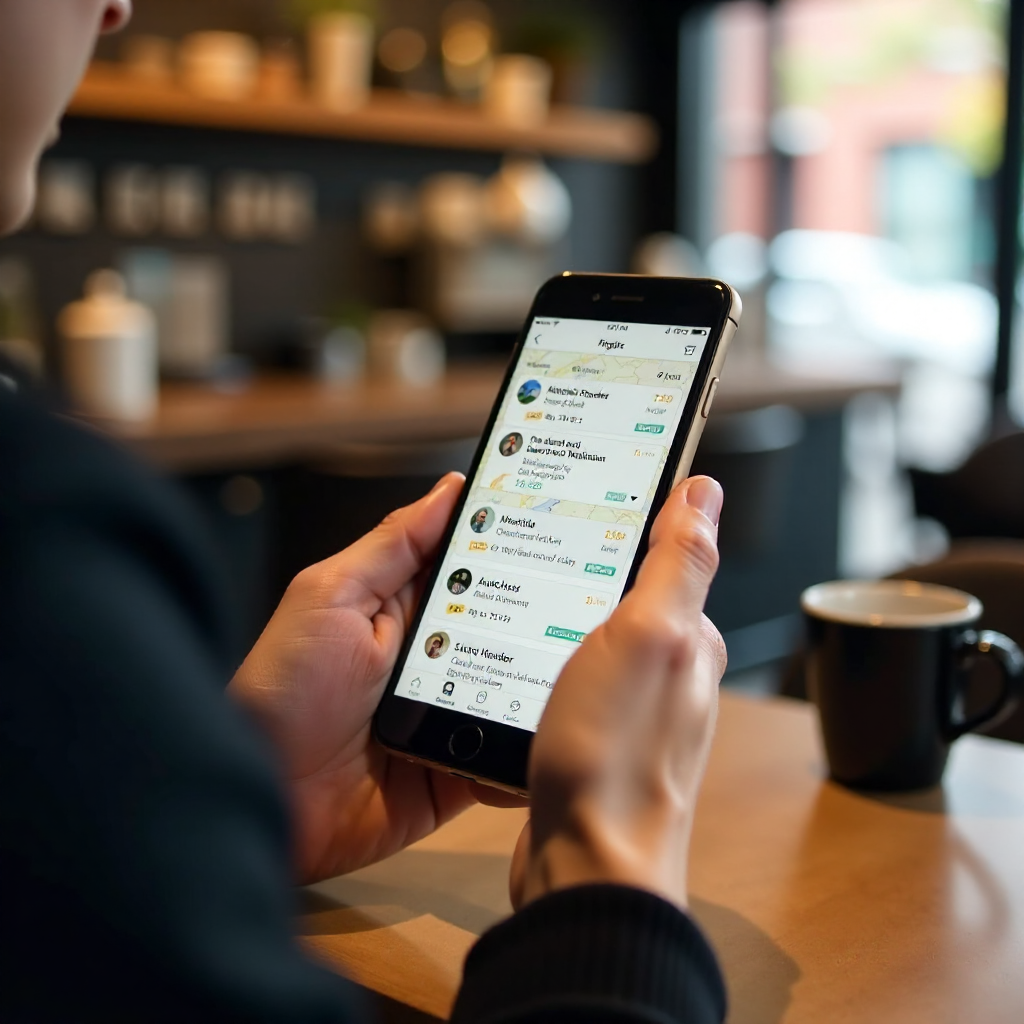
Google Maps is your baseline, but use it strategically. Search "specialty coffee" or "third-wave coffee" plus the city name rather than just "café" — this filters toward independent shops that have deliberately positioned themselves within the craft coffee world. Read the one-star reviews as carefully as the five-star ones; they often reveal whether a place has gone downhill or was always overhyped.
Review platforms like Yelp (strong in North America) and Google Reviews are useful for volume, but the most valuable research often happens on Reddit. City-specific subreddits — r/london, r/Tokyo, r/chicago — regularly feature threads asking exactly this question. The answers come from residents who have no incentive to promote anything. Search the subreddit for "best café" or "coffee recommendations" and you'll frequently find threads with dozens of specific, honest suggestions.
Dedicated city guides — both editorial publications and independent bloggers — are worth checking too. A well-maintained city guide written by someone who actually lives there will surface cafés that haven't been optimized for algorithmic discovery.
Use Social Media as a Discovery Tool
Instagram and similar platforms can surface independent cafés that rank poorly on mainstream review sites simply because they've never prioritized getting reviews. Visual-first platforms reward cafés that look interesting, and many genuinely great independent shops fall into that category.
The most reliable technique is searching location-tagged posts. On Instagram, search the city name as a location, then filter by "Recent" rather than "Top" — the top posts tend to be heavily promoted or tourist-facing. Recent posts from local accounts show you what residents are actually visiting right now.
Hashtags work similarly. Try combinations like #[cityname]coffee, #[cityname]café, or #specialtycoffee[cityname]. You'll quickly spot which shops appear repeatedly in posts from accounts that look like genuine locals rather than travel influencers passing through.
Local Facebook groups — neighborhood groups, expat communities, "best of [city]" groups — are underrated. These communities tend to be blunt and specific in a way that curated platforms aren't. Ask directly: "Looking for a quiet café with good espresso near [neighborhood]" and you'll often get five concrete answers within an hour.
Ask the Right People Once You're There
Word-of-mouth recommendations from people embedded in a city almost always outperform anything you'll find online. The trick is knowing who to ask and how to frame the question.
Hotel staff are an obvious starting point, but ask carefully. "Where do you go for coffee?" gets a more honest answer than "Where's a good café nearby?" — the second question invites a rehearsed tourist-facing response, the first invites a personal one.
Airbnb hosts who actually live in the city are often excellent sources. Many will have already included café recommendations in their welcome guide; if they haven't, ask specifically about their own morning routine.
One of the most reliable methods: ask a barista. If you find one decent café early in your trip, ask the person behind the counter where they'd go on their day off. Baristas know the local coffee scene intimately — they often know the owners of other shops personally — and they'll give you a straight answer.
Markets, bookshops, and independent record stores are also good places to ask. The people who work in them tend to be exactly the kind of neighborhood regulars who have strong opinions about coffee.
How to Spot a Great Café When You Walk In
A few seconds inside a café will tell you whether it's worth staying. You're looking for specific signals, not just a vibe.
Equipment and sourcing transparency are the clearest indicators of quality. A café that displays the name of its roaster — on the menu, on a chalkboard, on the bag behind the counter — is telling you they care about traceability. Espresso machines matter too: a well-maintained commercial grinder (separate from the machine, not a combo unit) suggests the staff understands extraction.
Watch how the barista works. Are they dialing in the grind, checking their shots, engaging with the process? Or are they pulling espresso while simultaneously scrolling their phone? The difference is visible within about 60 seconds.
Menu design is a subtle but reliable signal. A short, focused menu — four or five espresso drinks, a couple of filters, maybe a few food items — usually indicates confidence and intentionality. A laminated menu with 40 options, including several things that aren't coffee, often signals the opposite.
The clientele and atmosphere round it out. A café where people are clearly regulars — where the barista greets someone by name, where a few people are settled in with laptops or books rather than just passing through — is almost always a good sign.
Match the Café to Your Needs
Not every great café is right for every purpose. Filtering by use case saves time and prevents the frustration of arriving somewhere beautiful that doesn't work for what you actually need.
For remote work and laptop-friendly spaces, the key variables are WiFi reliability, plug socket availability, and noise level. Before visiting, check recent Google reviews filtered by mentions of "wifi" or "laptop" — reviewers are reliably vocal about both good and bad experiences on this front. Some excellent specialty coffee shops actively discourage laptop use during peak hours, which is a reasonable policy but worth knowing in advance.
For a slow weekend morning, prioritize cafés that open early, have comfortable seating, and serve food worth lingering over. For a quick espresso stop between meetings, you want somewhere with fast service and standing room — a classic Italian-style bar setup, if the city has one.
For a first date or a catch-up with a friend, atmosphere matters more than coffee purity. Look for places with moderate noise levels (conversation-friendly, not library-quiet, not deafeningly loud) and seating that allows some privacy.
Build Your Own City Café Map Over Time
Café discovery becomes genuinely rewarding when you treat it as an ongoing habit rather than a one-time research task. Over time, you build a personal map that no app can replicate.
The simplest system: create a private Google Maps list called something like "Coffee Worth Returning To" and save every café that earns it. Add a short note — "great filter, good for working Tuesday mornings, avoid weekends" — while the visit is still fresh. Over months and years, this becomes an asset that reflects your actual preferences rather than aggregate crowd opinion.
If you travel regularly, maintain separate lists by city. When you return somewhere, you already have a starting point. When a friend visits, you have something specific to share — which is far more useful than sending them a generic "best cafés in [city]" listicle.
Revisiting cafés matters too. A place that was outstanding two years ago might have changed ownership, or it might have gotten significantly better. Café regulars — people who return to the same place weekly — develop a relationship with a space that occasional visitors never quite access. Even if you're only in a city a few times a year, becoming a familiar face at one or two places changes the experience.
Frequently Asked Questions
What's the best app to find local cafés in a new city?
There's no single best app — the most reliable approach combines two or three tools. Google Maps works well for initial discovery and reading reviews. The Specialty Coffee Association's SCA website lists member roasters and cafés globally, which is a useful filter for quality. For niche discovery, city-specific subreddits on Reddit consistently outperform dedicated café apps because the recommendations come from actual residents.
How do I know if a café is truly independent or part of a chain?
Check whether the café has multiple locations under the same name — a quick Google search takes ten seconds. Also look at the branding: chains tend toward high-production visual identities, while independent shops often have simpler, more idiosyncratic design. If the café names its roaster and that roaster is a small local operation, it's almost certainly independent.
Are there reliable ways to find laptop-friendly cafés before visiting?
Search Google Maps reviews filtered by keywords like "wifi," "laptop," or "work." Workfrom.co is a community-built resource specifically for remote workers that lists cafés with notes on wifi speed, noise level, and power availability — it's particularly strong in larger cities.
What should I look for on a café's menu to judge coffee quality?
Look for the roaster's name, the origin of the beans (country, region, or farm), and processing method. A café that lists "espresso blend from [named roaster], notes of chocolate and dried fruit" is operating at a different level than one that lists only drink sizes. Seasonal or rotating single-origin options are another strong indicator.
How can I find cafés that are popular with locals, not just tourists?
Focus on residential neighborhoods rather than city centers or tourist districts. Cafés near universities, independent bookshops, or local markets tend to draw neighborhood regulars. Checking in on weekday mornings — rather than weekend afternoons — also shifts the clientele significantly toward locals.